Image accessibility, built into your content
Can a blind visitor tell what your photos show?
Their phone or computer reads the page aloud, and for each picture it has only a short line of text to read. Most websites never write it. NarraSight finds the pictures on your site that have none, writes the line, holds it for your approval, and saves it into your own site, where it stays whether or not you keep us.
The free check and the live demo need no sign-up, and nothing on your site is changed. The platform is live, and three organisations have signed free pilot agreements. Ask about a pilot.
""Image tag with an empty alt attribute.
Missing alt textOlive-green waterproof hiking boots laced on a grey rock
Reviewed · written to CMSConfidence 0.94 · approved by Sam · 14 Jun 2026
Coverage on this page: 100% · logged
Built in Glasgow
Founded by Abdul Eneser, who is blind and uses a screen reader every day. This problem is not abstract for us.
Young EDGE winner
Early stage and open about it. The platform is live, three free pilot agreements are signed, and we are pre-revenue.
Scoped, never oversold
Alt-text evidence for WCAG 2.2 SC 1.1.1, one part of accessibility, never a whole-site compliance promise.
Programmes and organisations NarraSight has taken part in or worked alongside
We are setting up user testing with blind and partially sighted people through Visibility Scotland.
Why it matters
Missing alt text leaves people and search engines in the dark
When images have no description, some visitors cannot tell what they show, and image search has less to go on.
Excludes people
Screen reader users cannot understand images without alt text, so your visual content is silent for them.
Hides you from search
Search engines read alt text to understand images. Without it, your pictures are harder to find in image search, because Google uses alt text to understand what an image shows.
Where the law comes in
Image text alternatives are the first success criterion in WCAG 2.2 (1.1.1). The European Accessibility Act's technical baseline in practice, EN 301 549, includes the same requirement, and service providers with fewer than 10 staff and turnover or balance-sheet total of EUR 2 million or less are exempt.
The outcome
What you get
Described in context
Each image is read against the product, the page and the purpose around it, so the description matches how you write, not a generic line that ticks a box.
Human review, by design
Anything the model is not confident about is held back for a person on your team to approve, edit or reject. You set the threshold, and nothing goes live until someone signs it off.
Written back into your CMS
Approved descriptions land in WordPress, Shopify or your own platform via our API. The alt text lives in your HTML, where screen readers read it, and travels with your content.
Coverage you can evidence
Every change is logged, so you can show a customer or your own team what was described, when and by whom.
Scale without the backlog
A catalogue of ten thousand product images is not a job for a spare afternoon. NarraSight works through your library, flags the uncertain cases, and writes the rest back, so your coverage climbs without your team drowning.
Yours to keep
No runtime widget, no lock-in. The descriptions are part of your content from day one. If you ever leave us, the alt text stays with you.
How it works
From undescribed to described in four steps
No magic and no overlays. A clear process that puts approved alt text into your website.
Scan your site
Start with the free image check. Paste any public page and see, in seconds, which of its images speak to a screen reader, which stay silent, and which say something useless. No sign-up, and nothing on your site is touched.
Generate descriptions in context
NarraSight drafts a description for each image from the image and the page around it, in your brand's own vocabulary, never from the filename.
Review where needed
Your team stays in control. Anything below your confidence threshold is held for a person to approve, edit or reject before it ships.
Write it back, verified
Approved descriptions are written straight into your CMS, and every change is logged. You can show what was described, when, and by whom.
coverage-dashboard · example
Governance target: 95%
| Image | Action | Reviewer | Time |
|---|---|---|---|
| img_8841 | Approved | Sam | 14 Jun, 14:02 |
| img_8840 | Edited | Priya | 14 Jun, 13:58 |
| img_8839 | Written back | system | 14 Jun, 13:55 |
For your team
Built for the people who run your website
You do not need to be an accessibility specialist. If you look after a website, NarraSight does the technical work for you.
Marketing teams
You own the website and want it to work for everyone who visits, and to be found by everyone who searches.
Ecommerce teams
A shopper who cannot see the photo misses what it shows, such as colour, fit and condition. The same line of text is what image search reads.
Digital and web teams
You are responsible for the site's quality and the evidence behind it. NarraSight gives you the fix and the record of it.
Our team
Built in Glasgow by a team across accessibility, product design and software
-

Abdul Eneser
Founder and CEO
Founder, chief executive and head of commercial. He sets NarraSight's strategy and leads its sales and partnerships across the accessibility sector. Blind, and a screen reader user every day.
-
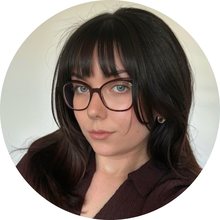
Erin McGurk
Product Design and Brand (freelance)
Shapes how the review workflow looks and behaves for the teams who use it, and how NarraSight is presented across its brand and communications.
-

Luke Holmes
Software Developer (freelance)
Builds the scanning, description and write-back pipeline behind NarraSight.
Why we are not an overlay
NarraSight vs accessibility overlays
| Capability | NarraSightRecommended | Accessibility overlay widgets |
|---|---|---|
| Fixes the actual content, or masks it at runtime | Fixes it. Writes the alt text into the page source in your CMS. | Masks it. The page source is unchanged, and a script patches the DOM on every load. |
| Persists if the tool is removed | Yes. The alt text is your content and stays in your CMS after you cancel. | No. Disable the widget and the descriptions disappear. |
| Reaches screen readers with scripts blocked, and search engines | Yes. Alt text in the markup is there for anything that reads the page, including crawlers. | Unreliable. Anyone reading the page without scripts gets the unfixed version, and not every crawler runs scripts. |
| Grounded in page context and your brand voice | Yes. Generated from page context plus a brand dictionary. | No. Generic where present, not brand-aware. |
| Human-reviewed before publish | Yes. Low-confidence items route to a review queue, with thresholds you set. | No. Fully automated at runtime, with no per-image human gate. |
| Auditable, per-image remediation record | Yes. Append-only log: which image, which description, when, approved by whom. | No. At best an aggregate status, with no per-image provenance. |
| Installs a JavaScript widget end users cannot remove | No widget. A one-off, durable write-back, with nothing injected. | Yes. A client-side script the visitor cannot turn off. |
| What the vendor claims | A narrow claim: image alt text, with a record of every change. Never whole-site compliance. | Documented risk. In April 2025 the US Federal Trade Commission approved a final order requiring a leading overlay vendor to pay USD 1 million and barring it from misrepresenting that its automated product can make any website WCAG compliant. |
| End-user display toolbar (contrast, text size) | No, out of scope. NarraSight does alt text, not a visitor display widget. | Yes. A toolbar lets visitors adjust contrast and text size, a genuine overlay feature, but it does not fix alt text. |
| Scope of accessibility claim | Narrow and honest: image alt text = WCAG 1.1.1 only. One part of an accessibility programme. | Broad and contested: marketed as whole-site WCAG/ADA compliance. |
| Works across your CMSs, not one runtime | Yes. Connector-based write-back, so the fix lives in your content wherever published. | Per-domain script, and nothing portable lands in your content. |
NarraSight fixes image alt text: WCAG 2.2 Success Criterion 1.1.1. Good alt-text coverage is necessary but not sufficient for full accessibility, and we are not a substitute for a complete WCAG 2.2 audit. We say so because promising total compliance from automation is what the US Federal Trade Commission acted against in April 2025.
Questions people ask
What is alt text and why does it matter?
Alt text is the written description of an image that lives in your page's HTML. Screen readers speak it aloud to blind and partially sighted visitors. Google uses it to understand what a picture shows for image search. An image without it is silent to both.
Is this an accessibility overlay?
No. An overlay is a script that sits on top of your site and tries to patch it in the browser. NarraSight writes the descriptions into your content, where they belong. It works with or without any third-party script, and it is yours to keep.
Does this make my site compliant?
No, and a tool that promises it should worry you. In April 2025 the US Federal Trade Commission ordered a leading overlay vendor to stop making that promise. NarraSight fixes WCAG 2.2 Success Criterion 1.1.1, the image alt-text rule, and proves it with an audit trail. That is one important part of accessibility, not whole-site conformance.
Does it replace human judgement?
No, and it is not meant to. NarraSight describes images and flags anything it is unsure about for a person to review. You decide the confidence threshold and you sign off the descriptions before they go live.
Which platforms do you support?
WordPress and Shopify through connectors in pilot, Optimizely and WooCommerce connectors in development, and other platforms through our REST API. If you are not sure whether yours fits, email us and we will give you a straight answer.
What does the free Health Score check?
It judges the quality of each image's alt text, not just whether text exists. Missing or junk alt text (filenames, placeholders, labels like "image") scores nothing. Alt text that exists but falls short, because it is too thin, too long, marketing filler, copy-pasted across images or unrelated to the page, scores half. Alt text that says what the image shows scores in full, judged against WCAG 2.2 SC 1.1.1. Every result also shows what the page would score once those images are described, and sets out what the gaps mean for your business, using only figures measured on your page and published facts we name. Writing that alt text, tailored to your brand and with a human in the loop, is what the paid product does.
Will this change my website?
The Health Score never touches your site. It only reads the public HTML. The paid product only writes the descriptions you have approved, and logs every change so you can see exactly what was done.
Do I need to be an accessibility expert?
No. NarraSight is built for marketing, ecommerce and digital teams. We do the technical work and explain everything in plain language.
What is the pilot cohort?
Three organisations have signed free pilot agreements, each with a scope and success measures agreed in writing first. Ask below.
How long does it take?
The free check takes about ten seconds for a page. For a pilot, it depends on the size of your site and the scope we agree together. We give you a clear timeline before anything starts.
Who is behind it?
NarraSight is built in Glasgow. Our founder, Abdul Eneser, is blind and uses a screen reader every day, so the problem we are solving is not abstract for us.
Pilot cohort
Talk to us about a pilot
NarraSight is early, and we would rather say so than pretend otherwise. The platform is live, the free image check is open to anyone, and three organisations have signed free pilot agreements. We are a Young EDGE winner. If undescribed images are a problem you want solved in your own content rather than papered over, tell us below.
Make every image speak.
Start with the free image check. It takes about ten seconds and asks nothing of you. If the number is lower than you would like, that is common, and it is fixable.
No overlay. The words stay in your site whether or not you keep paying us.